


Click here to discover our journey into Children’s Books and Education Literacy!
Children’s Books and Intercultural Tools for Telling Stories
(Preschool 0-6)
| Topics | Picture books – Wordless books – Storytelling – Public libraries – Education literacy – Visual literacy – Preschool – Interculture – Social inclusion | |||
| COURSE DESCRIPTION | The course is dedicated to teachers, educators, psychologists, pedagogues, librarians who want to improve the tools to promote reading with children aged 0 to 6. Access to quality books and stories is a crucial factor for children’s cognitive and relational development and an important tool for bridging the gap in situations of poverty and social exclusion. | |||
| TARGET | The course is designed for a group of educators, teachers, pedagoists, librarians, teachers (working with children aged 0 to 6) as well as adult trainers, group facilitators, and educators specialising in learning difficulties. (Min 8 participants, max 15, from 2 or more different countries). | |||
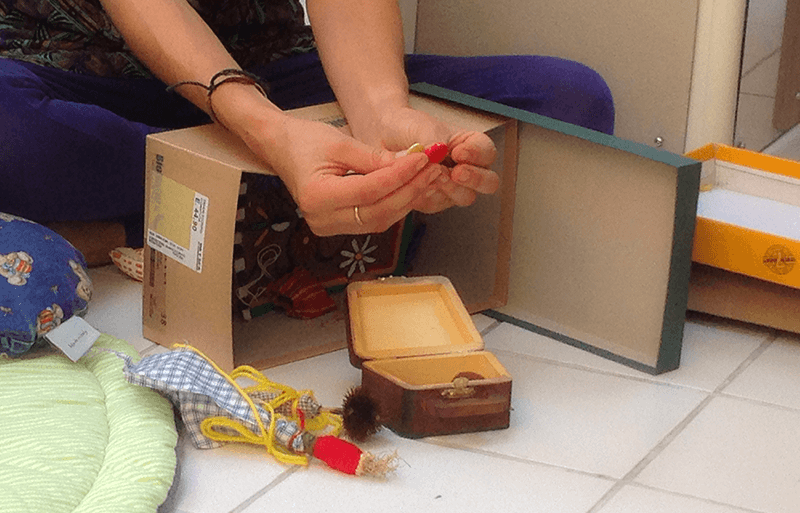
| LEARNING OUTCOMES | By the end of the course you will be able to: – know the characteristics of publishing for children and young people and recognize quality books – examine an illustrated book and use it in school with children of different ages and skills – organize the library in the classroom and at school, stimulating the active participation of children – involving families, especially those with a migrant background, in reading aloud at home and at school – organize storytelling workshops with the active participation of children, using different materials and languages (art, drawing, theatre, music)-build small theaters for storytelling, starting from wood and cardboard – get to know international projects to promote reading, carried out in difficult contexts and with few cultural resources – Search and use resources to autonomously study before and after the course | |||
| TRAINERS | Lucia Tringali, pedagogist and trainer with 25 years of experience in training courses for school teachers and educators and 10 in visual facilitation. She is also an expert in children’s literature, has worked as a librarian, involved in reading promotion and literacy education since 1995. Guido Bagni, co-trainer and tutor, Shiatsu instructor, has been working as a trainer since 2006. Since 2015 he has been coordinating mobility for youth workers and training courses for teachers within the Erasmus+ programme. He has skills in graphics, blog design and visual communication tools for the web. | |||
| PRACTICAL ORGANISATION | – 6 days of face-to-face training (6 hours a day) – 1 online follow-up meeting, 1 or 2 months after the conclusion of the course, to help consolidate the acquired skills and monitor dissemination and impact. | |||
| METHODOLOGY | The courses are designed as interactive processes with an emphasis on establishing a learning community between participants and stimulating active participation and sharing responsibility. We will experiment with different tools and each day there will be a space for personal reflection on learning methodologies. Every day participants will find a collection of books, toolkits, templates, videos and learning tools to explore in group or individually. | |||
| COURSE FEE | – Classroom training (6 days in Genoa): €80 per day, total €480 | |||
| PLACE | Genoa (Italy) | |||
| WHEN | The course will be held in several editions from June to October 2023. For more information contact us. | |||
| DIDACTICAL MATERIALS | Our participants will have an online platform (lifetime access) dedicated to preparation on the topic, with a dedicated tutor, teaching material, bibliography, practical exercises and organized resources and will have the opportunity to interact with the other participants. | |||
| REQUIRED SKILLS | none | |||
| MINIMUM LEVEL OF ENGLISH | B1 | |||
| EVALUATION | – At the end of each day: feedback on group work and activities; – At the end of the course: formative evaluation of the experience in group and individually; | |||
| CERTIFICATE | Certification of learning outcomes in connection with the “Quality standards for courses under Erasmus+ KA1”: – Certificate of Attendance which include the name of the participant, description of the course and its learning outcomes, dates, venues, the name of the host organisation and course director. The certificate will be delivered to people who have completed at least 85% of the planned teaching activities. – Europass certificate: the institution or school that sends the participants will be responsible for issuing the Europass certificate relating to the course: our organisation will collaborate by certifying the skills achieved by each participant. | |||
| DAY BY DAY PROGRAMME | DAY 1 – Presentation of the objectives of the course – Practical and organizational aspects (space, timetables and didactic organization, work tools) – Presentation of the participants and their specific training needs – Group agreements with graphical tools-Pedagogical theories and research: why it is important to read to young childrenEvening: (optional) welcoming activity (intercultural party or historical centre city tour) DAY 2 – Italian and international projects for the development of early education literacy – How to work on reading in a disadvantaged context (practices and projects) – Intercultural library: the Italian project Mamma Lingua; international projects on bilingualism 0-6 years – The involvement of families, especially those with a migrant background, in reading aloud at home and at school DAY 3 – How to choose books: what characteristics do they have and how can they be used – Illustrated albums and silent books: characteristics and reading, practical activities on silent books – How to set up a space for 0-6 years at school and in the library: design, furniture, choice of books. DAY 4 – Storytelling activities at school and in the library with different languages and tools: body, art and design, tactile materials, and books with different materials (Munari) DAY 5 – Kamishibai and story boxes: practical construction of tools for storytelling – Exchange activity on fairy tales of the oral tradition of the countries of origin of the participants – Video documentation of storytelling activities DAY 6 – How to communicate and disseminate training results – How to organize, document and share follow-up activities – How to organize a self-plan to deeply know the topic after the training – Formative evaluation of the experience: group evaluation of the quality aspects of the course with graphic tools; questionnaire of evaluation. If the participants are available, we can organize short video interviews to tell the experience, which will be uploaded on our Facebook page. |
